
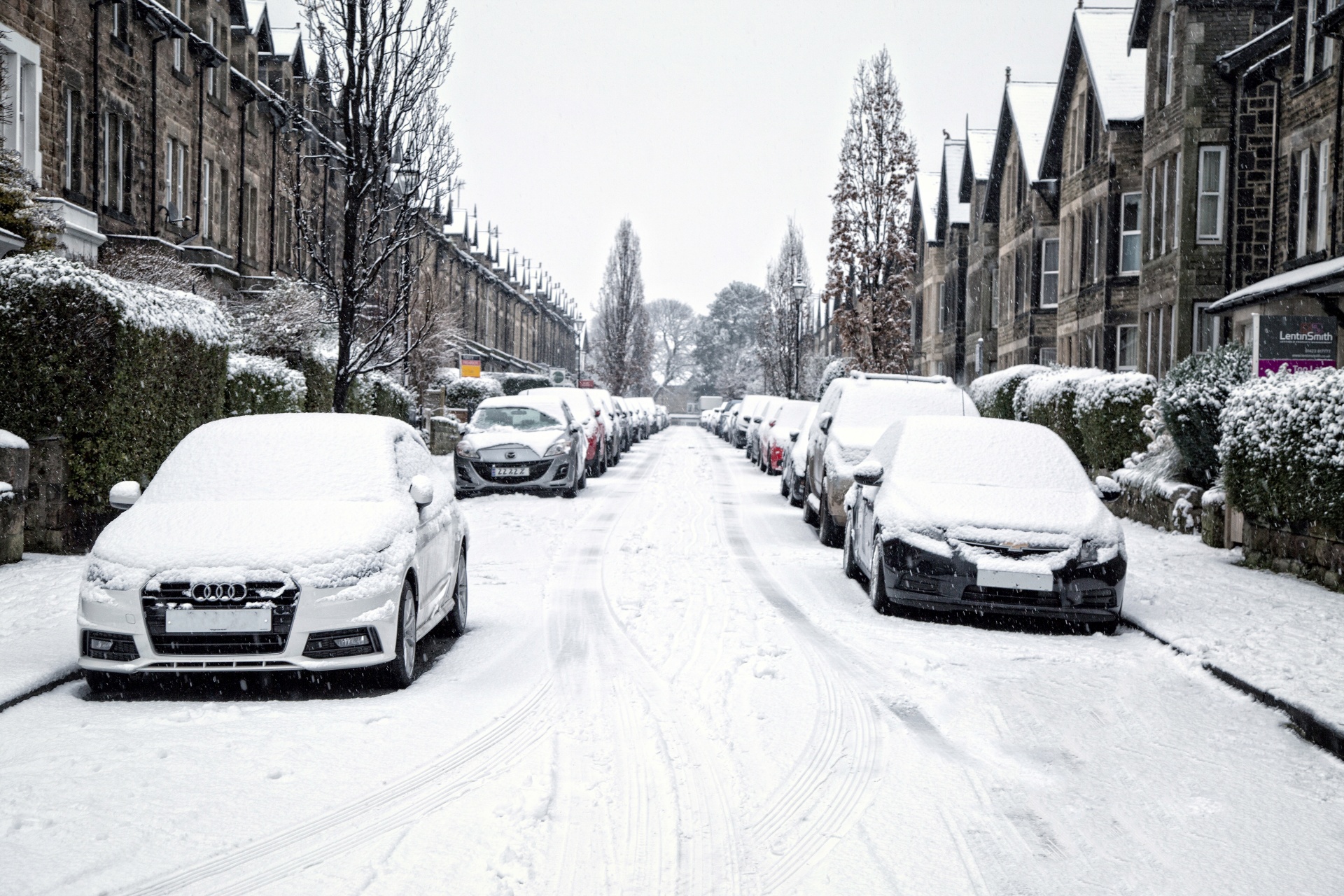
Driving in snow requires extreme caution.
Stopping distances can increase by up to ten times compared to dry roads, meaning even routine journeys demand far more planning, patience and awareness.
Before setting off, it is essential to clear all snow and ice from your windows, mirrors, lights and roof. Driving without full visibility is not only dangerous — it is illegal.
Prepare before you move
Good preparation makes a significant difference in winter conditions. Taking a few extra minutes before setting off can prevent incidents later on.
- Clear all snow and ice from the car, including the roof.
- Ensure lights are clean and visible.
- Check tyres are properly inflated and suitable for conditions.
Core driving techniques in snow
When driving in snow, smoothness is everything. Sudden inputs overwhelm grip and quickly lead to loss of control.
Smooth controls
Avoid sudden acceleration, harsh braking or sharp steering. All movements should be gentle and progressive to maintain traction.
Gear selection
Moving off: Use second gear to reduce wheel spin. In automatic vehicles, select winter mode if available.
On the road: Drive in a higher gear than usual, keeping engine revs low to reduce torque to the wheels.
Downhill: Use a lower gear and engine braking to control speed rather than relying solely on the brakes.
Hills
Maintain a steady, constant speed when climbing hills. Avoid stopping part-way up, as restarting on an incline can be very difficult in snow.
Visibility and lighting
Use dipped headlights in falling or lying snow so that other road users can see you clearly.
Do not rely on daytime running lights alone, as these do not illuminate the rear of the vehicle.
Fog lights should only be used when visibility drops below 100 metres. Remember to switch them off when conditions improve.
A final reminder
Winter driving is not about getting there quickly — it is about getting there safely.
Slow down, increase your following distance, and accept that journeys may take longer.
Leave a Reply